article-title

Bali has a way of making every celebration feel personal, yet when it comes to the legalities of marriage, the island is bound by traditional laws. For many interfaith couples, the path to “I do” requires a clear understanding of Indonesian regulations, which have shifted significantly in recent years.
If you are wondering, “can different religions marry in Bali?”, the answer is nuanced. While Indonesia is a diverse nation, its marriage laws are deeply rooted in religious tradition, which can present unique hurdles for interfaith pairs.
Can Couples of Different Religions Marry in Bali?
The direct answer is no, not legally, unless one partner undergoes a formal religious conversion.
According to Indonesian law, a marriage is only considered valid if it is performed according to the laws of the respective religions of the bride and groom. In practice, this means both parties must profess the same faith recognized by the state (Islam, Protestantism, Catholicism, Hinduism, Buddhism, or Confucianism) and hold a single religious ceremony.
Why Religion Matters in Indonesian Marriage Law
To understand why this is the case, we have to look at the legal framework. Marriage in Indonesia is governed by Law No. 1 of 1974, which ties the validity of a union to religious rules. There is no civil-only path that exists outside of a religious ceremony.
Recently, the Supreme Court Circular (SEMA) No. 2 of 2023 made these rules even more definitive. It explicitly instructs civil registries not to record interfaith marriages. For couples, this means that without a shared faith recognized by the state, a legal marriage certificate remains out of reach within Indonesia.
What Are Your Options as an Interfaith Couple?
While the legal path is strict, Bali remains a welcoming place for interfaith celebrations. Most couples choose one of the following three routes to make their union happen.
Religious Conversion
This remains the only way to secure a legal Indonesian marriage certificate as an interfaith pair. It involves one partner formally adopting the other’s faith. It is a deeply personal transition, one that carries weight far beyond the wedding day itself and is usually documented through a formal ceremony like Sudhi Wadani or Syahadat.
The Foreign Registration Route
A common workaround for both international and local couples is to handle the legal paperwork in a jurisdiction where civil interfaith marriage is standard, such as Singapore or Australia. You register the union there and simply bring the certificate back to Indonesia to be reported. This keeps the “contract” separate from the “celebration.”
The Symbolic Ceremony in Bali
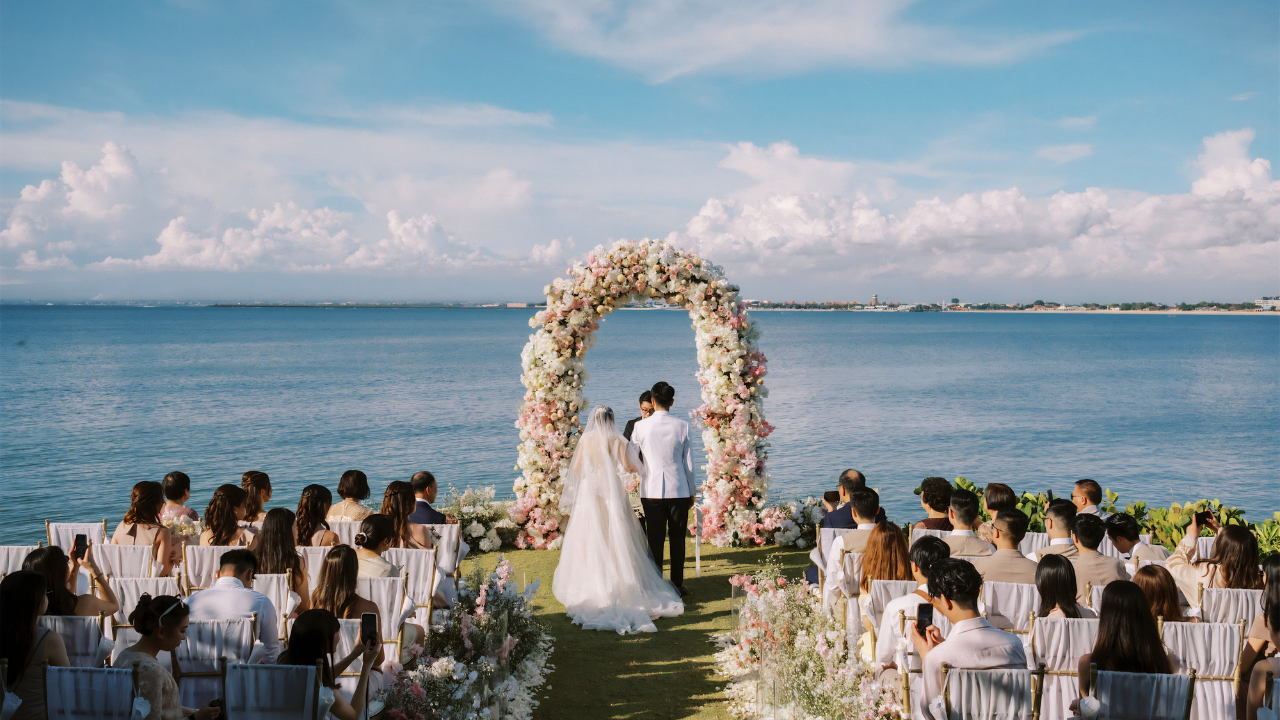
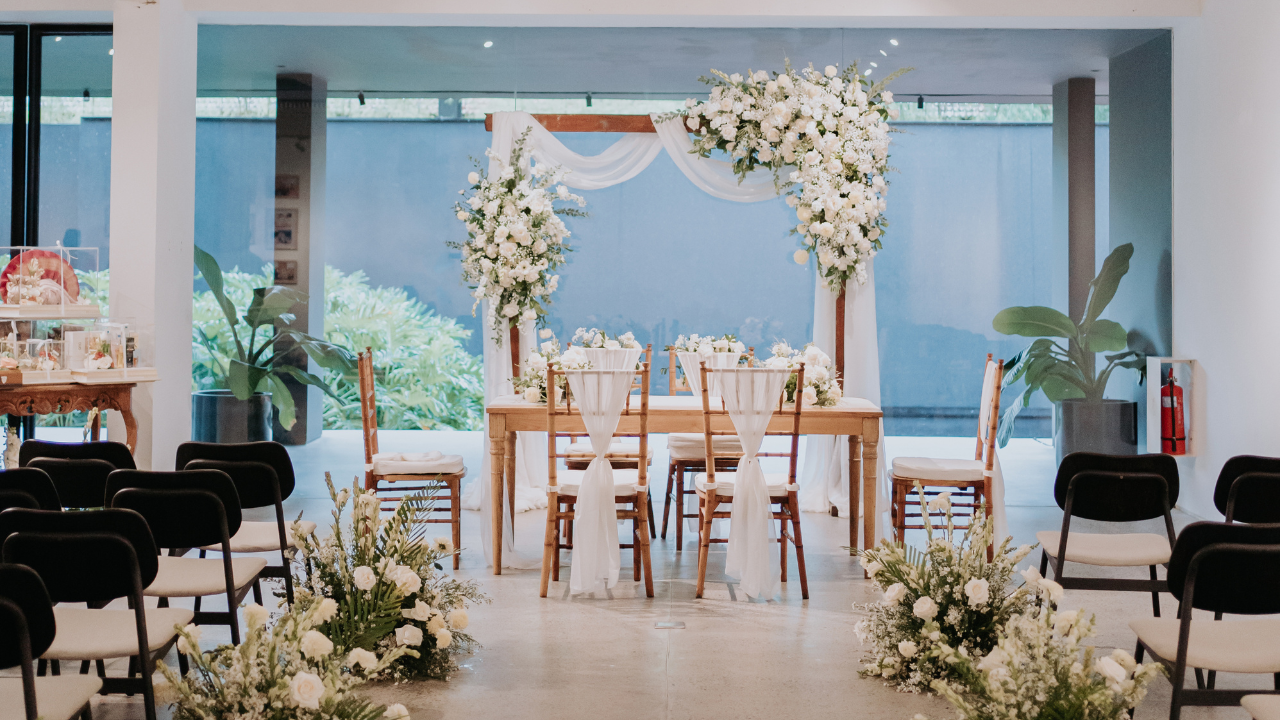
This is the most popular choice for those hosting weddings at spaces like Titik Dua. A symbolic ceremony (or commitment ceremony) feels exactly like a traditional wedding but carries no legal burden.
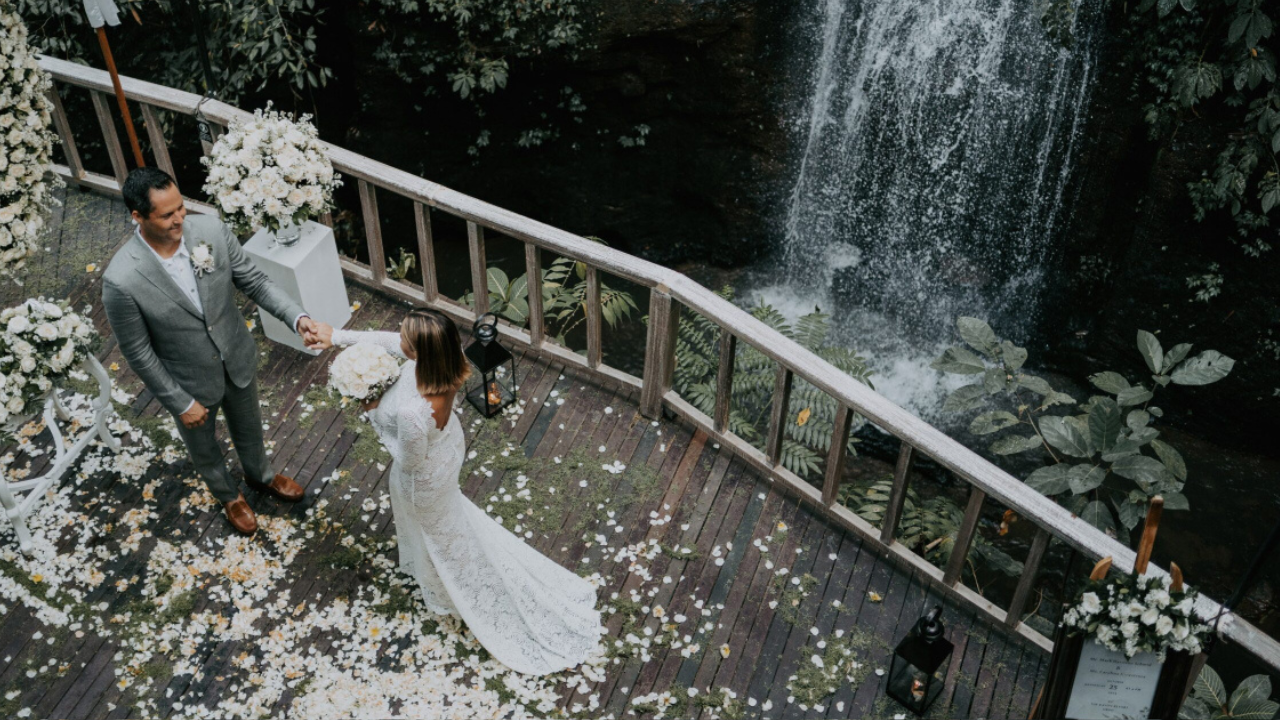
At Titik Dua, our Amphitheater serves as a backdrop where the focus is entirely on the couple’s story and the creative spirit of the union, rather than the friction of local bureaucracy.
Why Most Interfaith Couples Choose Symbolic Weddings

Choosing a symbolic wedding is about prioritizing the experience over the certificate. Here is why it works:
- Freedom to blend: You can mix rituals from both faiths, like a Balinese blessing paired with personal vows, without needing anyone’s permission.
- Zero legal friction: No embassy visits, no paperwork stress, and no worrying about changing SEMA rules.
- Focus on the narrative: The day stays about your story and what we call an intimate union rather than a government appointment.
Realistic Planning Advice

If you’re envisioning an interfaith celebration next year, these small details help:
- Start early: If marrying legally abroad first, start that paperwork at least 6 months before flying to Bali.
- Keep it simple: Symbolic weddings don’t require a “Certificate of No Impediment,” which really trims your admin to-do list.
- Expert guidance: Ensure your venue is up-to-speed on 2026 regulations so there are no surprises when you arrive.
FAQs
Can foreigners of different religions get married in Bali?
Legally, the same rules apply to foreigners as to Indonesians. Most foreigners choose a symbolic ceremony in Bali and handle the legalities in their home country.
Is a Balinese Blessing ceremony a legal marriage?
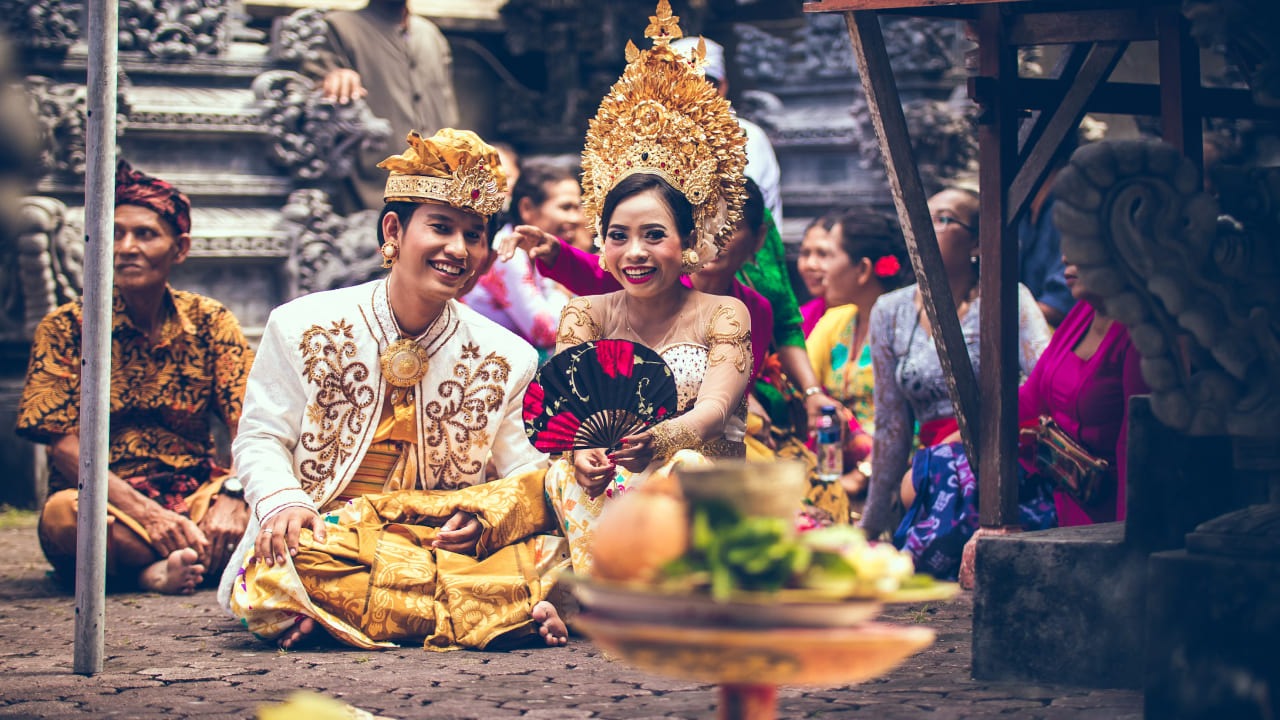
No. A Balinese Blessing is a spiritual and cultural ritual. It is a beautiful way to honor the island’s heritage, but it is not a substitute for a legal marriage certificate.
Can we have two religious ceremonies?
While possible, this is logistically difficult and rarely results in a single legal document under current Indonesian regulations.